
This week, Eidel had the pleasure of joining Spaceport Norway 2026 for two days filled with interesting discussions, new perspectives and inspiring conversations with people from across the Norwegian and European space community.
The conference explored some of the major questions shaping the sector today, from security and the growing strategic importance of the Arctic to European cooperation, investment and standardisation. Eidel was also pleased to contribute to the programme, with Truls O. Andersen and Dr. Tore-André Bekkeng sharing perspectives from our work
Some highlights from Spaceport Norway 2026
Spaceport Norway 2026 brought together government, industry, and European space stakeholders to discuss the growing strategic importance of space, particularly in the Arctic, and the need for stronger European cooperation.
State Secretary to the Ministry of Defence Marte Gerhardsen (Labour Party) opened the event by highlighting the importance of the space sector to Norway. She emphasised that space is becoming increasingly complex, making international cooperation essential if Norway and its partners are to succeed.
Pascal Legai of the European Space Agency (ESA) called for a collective European response to the challenges facing the Arctic. He stressed that European cooperation in space is essential to maintaining a secure Arctic, and that security from space ultimately depends on safety and resilience in space. He also pointed to the changing geopolitical landscape, including China’s ambitions in space towards 2050 and the United States’ increased focus on space deterrence.
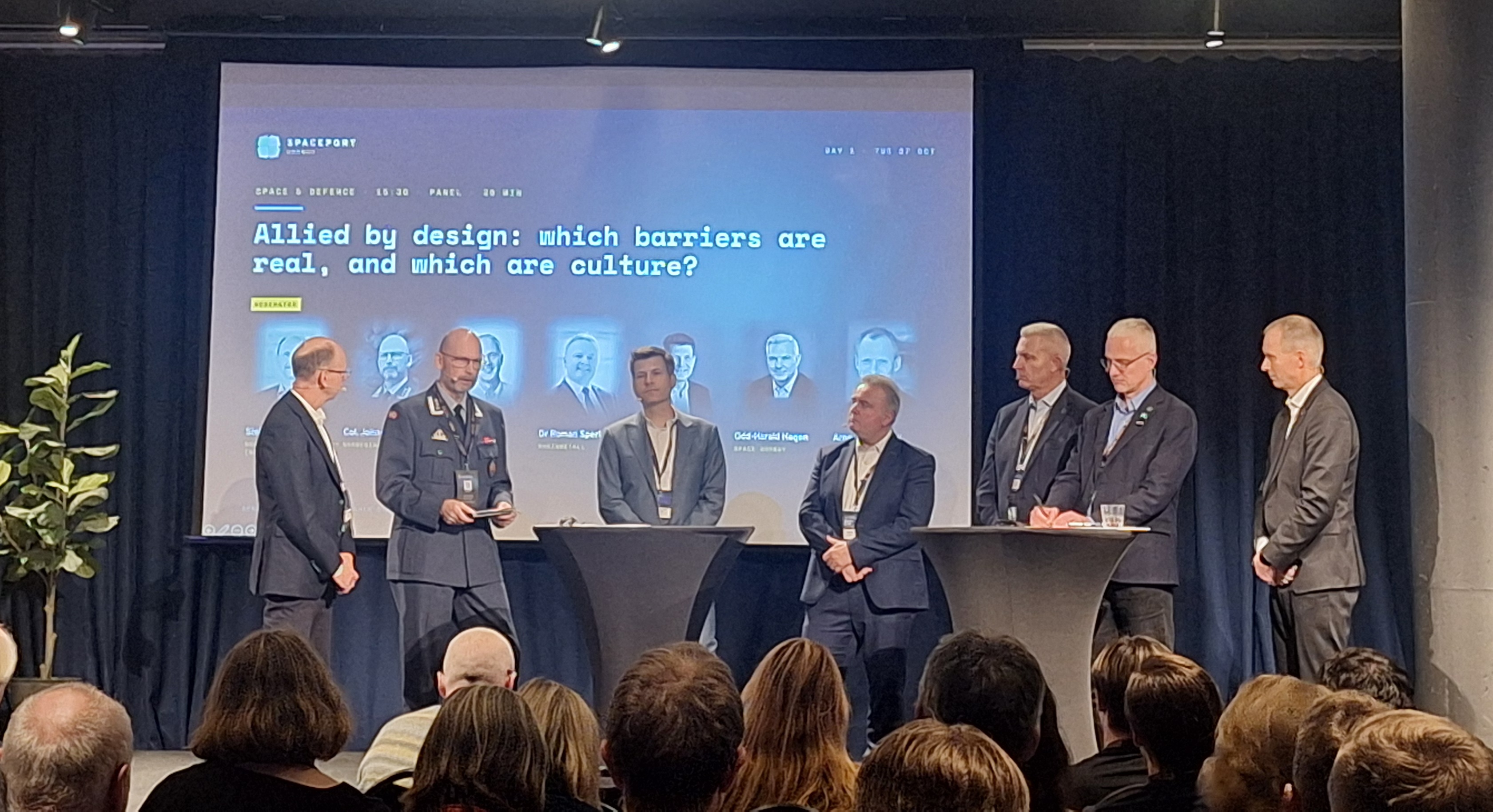
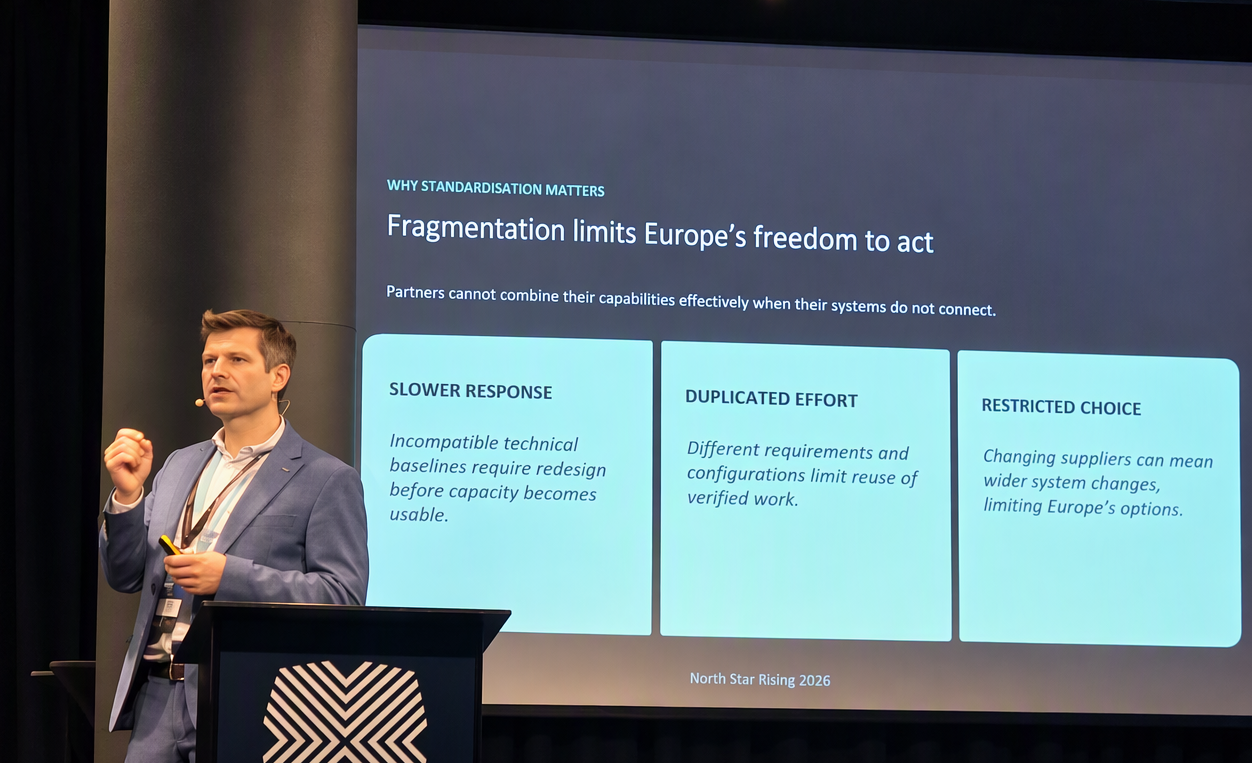
Building on this theme, Eidel’s Truls O. Andersen presented his perspective on the strategic importance of standardisation for Europe. During the subsequent panel discussion, he emphasised how common standards can strengthen Europe’s freedom to act in space by enabling partners to combine capabilities, increase interoperability, and broaden the choice of suppliers.
Several other representatives from the Norwegian space sector also highlighted the need for stronger government funding to support the sector’s ambitions. Colonel Bodding echoed this concern, calling for increased financial support for the Arctic Surveillance Programme.
Day 2: Cooperation, investment and Norway’s space ambitions
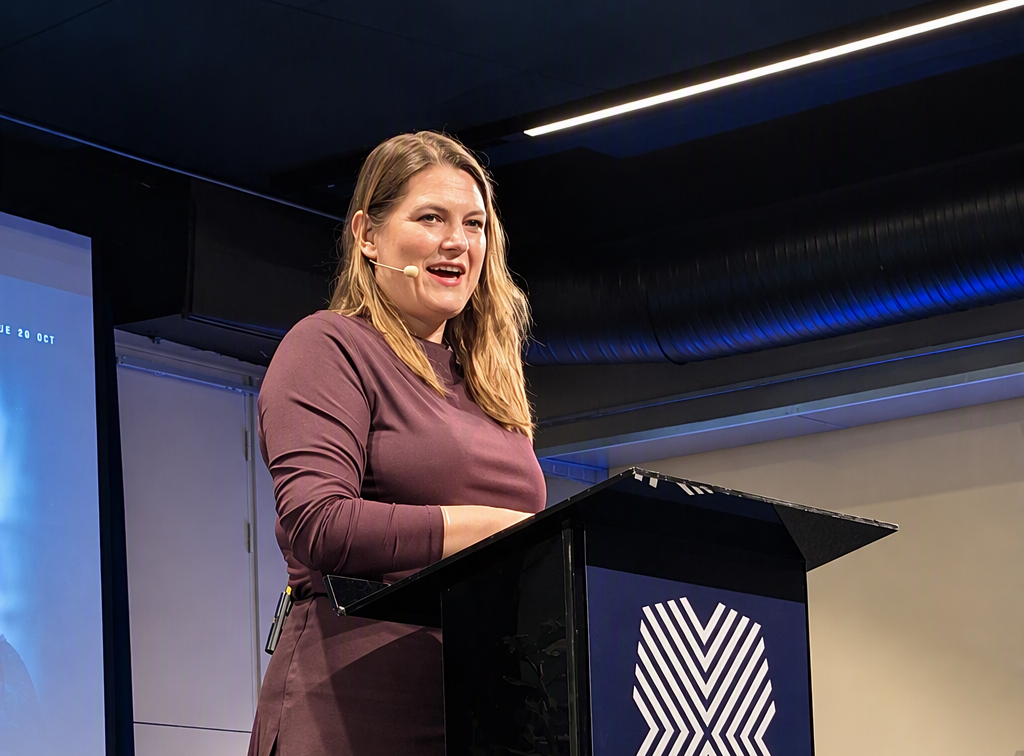
Minister of Trade and Industry Cecilie Myrseth (Labour Party), who has named 2026 the “Year of Space”, described the Norwegian space sector as one of the Government’s most important industries. She pointed to Norway’s strong expertise, the importance of Andøya, the Spectrum launch into polar orbit, and plans for a new launch pad.
The Minister also emphasised the importance of working closely with European partners and Canada, participating actively in EU and ESA programmes, and strengthening situational awareness in the Arctic through initiatives such as the Arctic Space Centre in Tromsø and the Arctic Space Summit in 2027.
With space becoming increasingly important to security in uncertain times, while also growing too complex and costly for individual countries to address alone, international cooperation was a recurring theme throughout the event. There were also calls for Europe to move faster, particularly ahead of the ESA Ministerial Council meeting in Madrid, and for start-ups and private capital to play a greater role in developing the sector.
ADHA and the role of standardisation
Eidel’s Dr. Tore-André Bekkeng provided a deeper technical perspective through his presentation on ADHA, Advanced Data Handling Architecture, and the standardisation of satellite electronics and modules.
ADHA demonstrates how European SMEs, Large System Integrators (LSIs), and ESA can work together to establish common standards for the functionality, interfaces, and form factors of future satellite avionics. The objective is to create a common foundation for satellite electronics that enables compatible modules from different suppliers.
In this sense, ADHA provides a concrete example of the broader message running through Spaceport Norway 2026: European cooperation and standardisation can help create a stronger, more competitive, and more resilient European space sector.
As always, one of the highlights of Spaceport Norway was meeting the people behind the industry. It was great to reconnect with partners, meet new faces and exchange ideas with others working towards many of the same goals. Thank you for two inspiring days. We look forward to continuing the conversations, strengthening cooperation and contributing to the future of the Norwegian and European space sector.